The Sacred Mushroom and the Cross: An Exploration
Allegro’s groundbreaking work, “The Sacred Mushroom and the Cross,” ignited debate, proposing a link between ancient rituals and Christian symbolism, often found in PDF format.
Graves’ “Food for Centaurs” further explored mushroom lore, influencing psychedelic research and challenging conventional interpretations of religious origins, readily available as a PDF.
The exploration delves into the potential origins of Christian beliefs, examining the Amanita muscaria and its possible role, often detailed in downloadable PDF studies.
Historical Context of Allegro’s Theory
John Marco Allegro’s controversial theory, initially presented in “The Sacred Mushroom and the Cross” (often found as a PDF download), emerged during the 1960s, a period of significant cultural and intellectual upheaval. This era witnessed a growing fascination with altered states of consciousness and a re-evaluation of traditional religious narratives.
Allegro, a philologist specializing in ancient languages and a former Dead Sea Scrolls translator, brought a unique perspective to the study of religious origins. His work challenged established theological interpretations, suggesting that early Christian symbolism was rooted in pre-Christian pagan rituals involving the Amanita muscaria mushroom.
The availability of his book in PDF format contributed to its widespread dissemination and fueled ongoing debate among scholars and enthusiasts alike, sparking both criticism and further research.
John Marco Allegro and the Original Publication
John Marco Allegro, a British scholar, published “The Sacred Mushroom and the Cross: A Study of the Relations Between Gnosticism and the Mushroom Cult” in 1968. This provocative work, now widely accessible as a PDF, proposed a radical reinterpretation of Christian origins.
Allegro’s background as a Dead Sea Scrolls translator heavily influenced his research. He argued that the Essenes, a Jewish sect, utilized psychedelic mushrooms in their religious practices, and that these practices informed early Christian symbolism.
The book’s controversial nature led to significant backlash, but its enduring appeal is evidenced by its continued availability in PDF form and ongoing scholarly discussion.
The Core Argument: Amanita Muscaria and Christian Symbolism
Allegro’s central thesis, detailed in “The Sacred Mushroom and the Cross” (available as a PDF), posits that the Amanita muscaria mushroom played a crucial role in the development of Christian iconography and ritual. He argued the mushroom’s imagery is embedded within core Christian symbols.
Specifically, Allegro linked the mushroom’s red cap with white spots to depictions of the manger, the red clothing of Christ, and even the shape of the cross itself. He suggested the ‘tree of knowledge’ in Genesis was, in fact, this mushroom.
This controversial claim, explored in the PDF, proposes a shamanistic origin for Christian beliefs, centered around the psychoactive properties of Amanita muscaria.
Robert Graves and the Mystical Mushroom
Robert Graves, inspired by ancient lore, explored the mystical properties of mushrooms in “Food for Centaurs,” complementing Allegro’s theories found in the PDF.
His work deepened understanding of mushroom worship and its potential influence on religious symbolism, enriching the debate surrounding “The Sacred Mushroom and the Cross”.
Graves’ Influence on the Psychedelic Renaissance
Robert Graves’ meticulous research into mythology and the sacredness of plants, particularly mushrooms, profoundly impacted the burgeoning psychedelic renaissance of the mid-20th century. His work, notably “Food for Centaurs,” provided a literary and historical framework for understanding the potential role of psychoactive substances in ancient rituals.
This resonated with researchers like R. Gordon Wasson, whose explorations of Mexican mushroom traditions, often documented in accessible PDF formats, mirrored Graves’ insights; Graves’ perspective, alongside Allegro’s controversial claims in “The Sacred Mushroom and the Cross” (available as a PDF), helped legitimize the study of entheogens and their connection to religious experience, fostering a new wave of ethnomycological investigation.
Food for Centaurs: Exploring Mushroom Lore
Robert Graves’ “Food for Centaurs” is a seminal work meticulously detailing the historical and mythological significance of mushrooms across diverse cultures. The book explores ancient beliefs surrounding these fungi, portraying them not merely as food, but as conduits to altered states of consciousness and divine realms.
Graves connects mushroom consumption to ecstatic rituals and shamanic practices, influencing later research into the potential psychoactive origins of religious symbolism. The book’s insights, often referenced alongside Allegro’s “The Sacred Mushroom and the Cross” (available as a PDF), demonstrate a deep understanding of mushroom lore, readily accessible in various PDF editions.
Graves’ Perspective on the Sacredness of Mushrooms
Robert Graves viewed mushrooms as profoundly sacred, believing they held a central place in ancient religious experience. He posited that the Amanita muscaria, specifically, was revered as a divine gift, facilitating communication with the spirit world and inspiring mythic narratives.
Graves’ perspective, detailed in works like “Food for Centaurs,” challenged conventional understandings of religious origins, suggesting psychedelic experiences played a crucial role. His ideas resonate with Allegro’s theories in “The Sacred Mushroom and the Cross” (often found as a PDF), sparking debate and further exploration of this fascinating connection, readily available in PDF format.
Amanita Muscaria: The Fly Agaric
Amanita muscaria, the iconic fly agaric, is central to theories linking mushrooms and religious symbolism, detailed in resources like “The Sacred Mushroom and the Cross” PDF.
Botanical Characteristics and Distribution
Amanita muscaria exhibits a striking appearance: a vibrant red cap adorned with white spots, though variations exist. This basidiomycete features gills, a ring on its stalk, and a volva at the base. Its distribution is widespread across temperate and boreal regions globally, including Europe, Asia, and North America.
Frequently found in symbiotic relationships with trees like birch, pine, and spruce, it thrives in forests. The mushroom’s presence is often linked to folklore and shamanic practices, as explored in texts like “The Sacred Mushroom and the Cross” – often available as a PDF – detailing its historical and geographical significance.
Understanding its botany is crucial when considering its role in ancient rituals.
Traditional Uses and Ritual Significance
Across Siberia, Northeast Asia, and among certain Indigenous groups, Amanita muscaria held profound ritual importance. Historically, it was utilized in shamanic practices to induce altered states of consciousness, believed to facilitate communication with the spirit world.
These practices often involved careful preparation to mitigate toxicity. Allegro’s “The Sacred Mushroom and the Cross” (often found as a PDF) proposes a connection between these rituals and the origins of Christian symbolism, suggesting parallels in ecstatic experiences and symbolic representation.
Its use wasn’t merely recreational; it was deeply embedded in spiritual belief systems.
Psychoactive Properties and Effects
Amanita muscaria contains ibotenic acid and muscimol, psychoactive compounds affecting the central nervous system. Ingestion induces a range of effects, including altered perception, euphoria, muscle twitching, and confusion. These effects vary significantly based on dosage, preparation, and individual sensitivity.
Allegro’s theories, detailed in “The Sacred Mushroom and the Cross” (available as a PDF), posit that similar psychoactive experiences may have influenced early religious experiences.
However, it’s crucial to note that Amanita muscaria is toxic and can cause unpleasant side effects; responsible research is vital.
The Cross as a Symbol
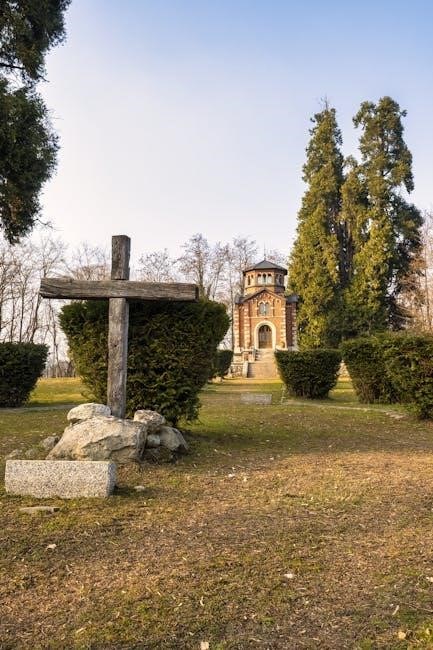
The cross, predating Christianity, held significance in various cultures, potentially linked to cosmic symbolism and the Amanita mushroom, explored in PDF analyses.
Early Christian art often incorporated the cross, evolving in meaning, with connections to ancient symbolism detailed in downloadable PDF resources.
Pre-Christian Symbolism of the Cross
Before its adoption by Christianity, the cross existed as a potent symbol across numerous ancient cultures, representing concepts far removed from the religious narrative it later embodied. Archaeological evidence, often detailed in accessible PDF documents, reveals its presence in pre-Christian Europe, Asia, and the Middle East.
Frequently, it symbolized the cosmos, representing the intersection of the earthly and divine realms, or the four cardinal directions, embodying wholeness and balance. Some interpretations, explored in scholarly PDFs, suggest a connection to tree worship, with the cross representing a stylized tree of life.
Interestingly, certain theories, like those presented in “The Sacred Mushroom and the Cross” PDF versions, propose a link between the cross and the shape of the Amanita muscaria mushroom when viewed from above, suggesting a possible origin in shamanic practices.
The Cross in Early Christian Art and Theology
Initially, depictions of the cross were rare in early Christian art, with symbols like the anchor or the chi-rho monogram favored due to the cross’s association with pagan practices and Roman execution. However, as Christianity gained prominence, the cross gradually became a central visual element, often analyzed in detailed art history PDFs.
Early theological interpretations focused on the cross as a symbol of sacrifice, redemption, and victory over death, themes extensively discussed in theological texts available as PDF downloads. The connection to “The Sacred Mushroom and the Cross” theory, found in related PDF analyses, suggests alternative interpretations.
Some scholars propose that early Christian symbolism may have incorporated pre-existing pagan motifs, potentially including imagery linked to the Amanita muscaria, as explored in controversial PDF research.
Connections Between the Cross and Mushroom Imagery
Allegro’s controversial thesis, detailed in “The Sacred Mushroom and the Cross” (often found as a PDF), posits a visual and symbolic link between the cross and the Amanita muscaria mushroom. He argued the mushroom’s shape, with its central stalk and radiating cap, resembles a cruciform structure, a claim debated in numerous PDF rebuttals.
Furthermore, the red and white coloration of the Amanita is linked to symbolic representations of blood and purity, themes central to Christian iconography, explored in comparative religion PDF studies. The mushroom’s association with altered states of consciousness is also considered.
These connections, though speculative, have fueled ongoing discussion, readily accessible through online PDF archives and scholarly articles.
The Dead Sea Scrolls and Allegro’s Interpretation
Allegro controversially linked the Essenes, mentioned in the Dead Sea Scrolls, to psychedelic mushroom rituals, detailed in his PDF, “The Sacred Mushroom and the Cross.”
His interpretations remain highly debated among scholars, with many dismissing his claims regarding hallucinogens and early Christian origins, as found in critical PDF analyses.
Allegro’s Controversial Claims Regarding the Essenes
Allegro’s most provocative assertions centered on the Essenes, a Jewish sect contemporaneous with early Christianity, as detailed in his seminal work, “The Sacred Mushroom and the Cross,” often available as a PDF download.
He posited that the Essenes engaged in ritualistic consumption of Amanita muscaria, believing the mushroom induced ecstatic visions and played a central role in their religious practices. This claim, outlined in the PDF, directly challenged established understandings of Essenes’ ascetic lifestyle.
Allegro further suggested that the Essenes’ practices heavily influenced the development of early Christian symbolism, arguing that key figures and narratives were rooted in psychedelic experiences, a theory elaborated upon within the PDF text.
The Role of Psychedelics in Essene Practices (Allegro’s Hypothesis)
Allegro’s hypothesis, extensively detailed in “The Sacred Mushroom and the Cross” (often found as a PDF), proposed that the Essenes utilized Amanita muscaria – and potentially other psychoactive substances – to achieve altered states of consciousness during religious ceremonies.
He argued these experiences informed their theology and rituals, suggesting the mushroom facilitated direct encounters with the divine, a perspective thoroughly explored in the PDF version of his book.
Allegro believed the Essenes’ use of psychedelics contributed to their unique interpretations of Jewish law and prophecy, ultimately influencing the nascent Christian movement, as presented in the controversial PDF.
Criticisms and Rebuttals of Allegro’s Interpretation
Allegro’s claims in “The Sacred Mushroom and the Cross” (widely available as a PDF) faced substantial criticism from scholars, primarily concerning his linguistic interpretations and reliance on speculative connections between ancient texts and mushroom symbolism.
Many argued his etymological arguments were flawed and lacked rigorous evidence, dismissing the link between Essenes, psychedelics, and Christian origins as unsubstantiated, a point frequently raised in reviews of the PDF.
Critics also questioned his methodology, accusing him of selectively interpreting evidence to fit his pre-conceived theories, despite the book’s enduring popularity as a PDF download.
Cultural Significance of Sacred Mushrooms
Ancient cultures revered mushrooms, with traditions echoing in texts like “The Sacred Mushroom and the Cross” (PDF), revealing their role in worship and shamanic practices.
Mexican traditions, utilizing psilocybin, demonstrate enduring reverence, while the PDF details similar practices across diverse societies and historical periods.
Mushroom Worship in Ancient Cultures
Throughout history, numerous cultures have demonstrated profound reverence for mushrooms, often attributing spiritual and divine qualities to these enigmatic fungi. Evidence suggests that mushroom worship predates many organized religions, with archaeological finds and ancient texts hinting at their central role in rituals and ceremonies.
Allegro’s “The Sacred Mushroom and the Cross” (available as a PDF) proposes that early religious symbolism, including depictions of deities and sacred objects, may have originated from experiences induced by psychoactive mushrooms, particularly Amanita muscaria.
These practices weren’t limited to a single region; similar traditions have been identified in Siberia, Mesoamerica, and even parts of Europe, showcasing a widespread and deeply rooted connection between humanity and the mystical properties of mushrooms.
Mexican Traditions and the Use of Psilocybin Mushrooms
Mexico holds a particularly significant place in the history of sacred mushroom use, with indigenous cultures, like the Mazatec, maintaining traditions of utilizing psilocybin mushrooms for healing, divination, and spiritual connection for centuries. These practices, often conducted by shamans or curanderos, were deeply embedded in their cosmology.
R. Gordon Wasson’s groundbreaking work, documented in accounts accessible as a PDF, detailed his experiences with Maria Sabina, a Mazatec healer, and the “magic mushrooms,” bringing this tradition to wider attention.
Allegro’s theories, explored in “The Sacred Mushroom and the Cross” (also available as a PDF), suggest parallels between these Mexican rituals and the origins of early Christian symbolism, sparking ongoing debate and research;
The Role of Mushrooms in Shamanic Practices
Mushrooms, particularly psychedelic varieties, have long held a central role in shamanic practices across numerous cultures, serving as a bridge to the spirit world and facilitating healing rituals. Shamans utilized these fungi for divination, accessing altered states of consciousness, and communicating with ancestral spirits.
Allegro’s controversial thesis, detailed in “The Sacred Mushroom and the Cross” (often found as a PDF), proposes that similar practices may have influenced the development of early Christian beliefs and symbolism.
Wasson’s ethnomycological research, documented in accessible PDF reports, highlighted the importance of mushrooms in indigenous shamanism, particularly in Mexico, further fueling the debate surrounding their historical significance.
Criticisms and Ongoing Debate
Allegro’s theories, detailed in “The Sacred Mushroom and the Cross” PDF, faced strong scholarly opposition, with alternative interpretations of Christian symbolism proposed;
Debate continues regarding the validity of psychoanalytic approaches to religious origins, and the influence of entheogens, as explored in available PDF analyses.
Scholarly Reception of “The Sacred Mushroom and the Cross”
Allegro’s “The Sacred Mushroom and the Cross,” even in PDF form, initially sparked considerable controversy within academic circles. Many scholars dismissed his claims as speculative and lacking rigorous evidence, criticizing his reliance on linguistic connections and unconventional interpretations of ancient texts.
The book was often labeled as sensationalist, attracting more public attention than serious academic consideration. However, it also stimulated debate and prompted further research into the potential role of psychoactive substances in ancient religions.
Despite the criticisms, the work’s influence persisted, inspiring subsequent explorations of entheogens and their impact on religious experience, frequently discussed in related PDF publications.
Alternative Interpretations of Christian Symbolism
Beyond Allegro’s controversial thesis, explored in detail within the “Sacred Mushroom and the Cross” PDF, numerous alternative interpretations of Christian symbolism exist. These range from purely theological explanations to analyses rooted in classical mythology and Near Eastern religious traditions.
Some scholars propose that the cross predates Christianity, representing cosmic principles or fertility symbols. Others emphasize the influence of Greco-Roman mystery cults on early Christian iconography.
These diverse perspectives offer nuanced understandings, challenging any single, definitive explanation and enriching the ongoing discourse surrounding the origins and evolution of Christian beliefs, often found in comparative PDF studies.
The Validity of Psychoanalytic Approaches to Religious Origins
Applying psychoanalytic frameworks, as indirectly prompted by explorations in “The Sacred Mushroom and the Cross” PDF, to religious origins remains contentious. While Allegro’s work sparked interest, the reliance on speculative interpretations of symbolism faces significant criticism.
Critics argue that psychoanalytic reductionism oversimplifies complex historical and cultural phenomena, imposing modern psychological concepts onto ancient belief systems.
However, proponents suggest these approaches can illuminate unconscious motivations and archetypal patterns underlying religious narratives, offering a complementary lens, though rarely conclusive, when examining the PDF’s central claims.
R. Gordon Wasson and Ethnomycological Research
Wasson’s work with Maria Sabina, detailed in related PDFs, profoundly impacted the study of entheogens and religion, echoing themes from “The Sacred Mushroom and the Cross.”
Wasson’s Work with Maria Sabina and Psilocybin Mushrooms
R. Gordon Wasson’s pivotal 1955 experience with Maria Sabina, a Mazatec curandera, in Mexico, marked a turning point in Western understanding of psilocybin mushrooms. He documented her sacred ceremonies, revealing the deep spiritual significance of these fungi within indigenous traditions.
This research, often accessible in scholarly PDFs, directly influenced the subsequent isolation of psilocybin by Albert Hofmann and sparked a wave of ethnomycological exploration. Wasson’s detailed accounts, alongside the theories presented in “The Sacred Mushroom and the Cross,” fueled speculation about the historical role of psychedelic mushrooms in religious development.
His work provided crucial context for understanding the potential connections between ancient rituals and altered states of consciousness, prompting further investigation into the cultural and spiritual uses of these powerful plants.
The Mythophile and the Mycophile: A Connection to Graves
R. Gordon Wasson, the “mycophile,” and Robert Graves, the “mythophile,” shared a fascinating intellectual kinship, both captivated by the power of myth and the sacred properties of mushrooms. Graves’ extensive research, detailed in works like “Food for Centaurs,” resonated with Wasson’s ethnomycological discoveries, often found in accessible PDF formats.
Both men explored the potential links between ancient rituals, altered states of consciousness, and the origins of religious belief, as theorized in “The Sacred Mushroom and the Cross.” Their combined perspectives offered a compelling, albeit controversial, re-evaluation of Western cultural history.
This connection highlights the interdisciplinary nature of their inquiry, bridging mythology, botany, and anthropology.
Impact on the Study of Entheogens and Religion
“The Sacred Mushroom and the Cross,” alongside Wasson’s and Graves’ work, profoundly impacted the burgeoning field of entheogen research, sparking intense debate and inspiring new avenues of inquiry, often documented in scholarly PDFs.
The book challenged traditional interpretations of religious origins, suggesting that psychedelic experiences may have played a crucial role in the development of early religious beliefs and symbolism. This ignited a re-examination of ancient rituals and mythologies.
It fueled interest in the ethnobotanical study of sacred plants and fungi, prompting further investigation into their cultural and spiritual significance.